Heimo Rau
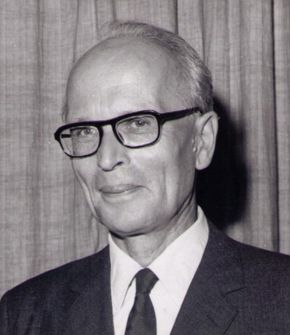
- Profession: Indologist and Art Historian
- Country of Origin: Germany
- Date of Birth: 1912
Heimo Rau (December 30, 1912 – December 30, 1993) was a German Indologist, art historian, archaeologist, and scholar of South Asian art and culture, best known for his work on Indian and Nepali art and architecture. He was born in Breslau, then part of Germany (today Wrocław, Poland), at a time when Europe was still deeply connected to the classical traditions that would later shape his intellectual path.
After completing secondary school, Rau first turned to theater, enrolling in director training at the Max Reinhardt Seminar in Vienna. At the same time, however, his interests broadened, and he began studying art history, Indology, archaeology, and German studies at the University of Vienna. Gradually, his academic curiosity outweighed his theatrical ambitions, and he set aside the dream of becoming a director to devote himself fully to scholarship.
In 1935, he completed his doctoral dissertation on the early “Buddhist Stupa Architecture of Sanchi” in Madhya Pradesh, central India. This study not only established his scholarly reputation but also laid the foundation for a lifelong engagement with South Asian art, temple architecture, sculpture, visual culture, and archaeology.
A few years later, in 1938, Rau joined the Indian Department of the Ethnological Museum in Berlin as an assistant, where he worked primarily on Turfan materials. Shortly thereafter, in 1940, he married Herta Wehnert. That same year, he was drafted into military service during World War II. However, due to rheumatic arthritis, he was soon released and returned to Germany. Together, Heimo and Herta Rau had four children—three daughters and one son, although one daughter and the son died shortly after birth.
In the aftermath of the war, Rau’s career took a different yet equally formative direction. From 1946 to 1960, he taught art history, general history, Greek, and Latin at a Waldorf school, while also offering independent courses in religion and literature. At the same time, he lectured in art history at the adult education center in Stuttgart. During these years, he traveled extensively on art-historical study tours, experiences that led to the publication of several art books and travel guides.
Towards the end of 1960, Rau’s long-standing engagement with South Asian culture took a more institutional form. He moved to New Delhi, where he served until 1965 as Director of the German Cultural Institute, actively promoting cultural exchange between Germany and South Asia. In 1962, he further strengthened academic ties by founding the New Delhi branch of the South Asia Institute of Heidelberg University. In 1966, he returned to Germany with his family to complete his habilitation at Heidelberg University in 1968, thereby formally consolidating his academic standing.
Soon afterward, Rau returned to India, and in 1969, he established the Max Mueller Bhavan (today the Goethe-Institut) in Mumbai, which he directed until 1973. In 1974, he served as a visiting professor at Jawaharlal Nehru University (JNU) in New Delhi. Finally, in 1978, Rau moved to Kathmandu, where he founded and became the first director of the Goethe-Institut. In this role, he played a crucial part in strengthening cultural and scholarly relations between Germany and Nepal, while also deepening his engagement with Nepali art and architecture. Even long after his direct involvement had ended, the institution he created remains a living space of exchange, offering successive generations of young students hope, access, and real opportunities to study, travel, and learn in Germany.
Within the Nepali context, Rau made a lasting contribution through his preliminary academic report on the restoration of the “Pujari Math” in Bhaktapur (1970s). In this work, published in the Journal of the Nepal Research Center, Rau’s role was crucial in providing art-historical interpretation and scholarly contextualization of the project. He carefully documented the building’s history, architectural significance, and the restoration process, thereby providing an early scholarly record of conservation efforts in the historic city.
At the same time, Rau’s broader engagement with Nepal found expression in his book Nepal: Kunst- und Reiseführer, 1984 (Nepal: Art and Travel Guide). Combining scholarly insight with an accessible narrative style, the book offered a comprehensive introduction to Nepal’s artistic heritage, ranging from sculpture and temple art to architectural forms. As such, it played a crucial role in introducing Nepali art and architecture to a European readership and continues to be cited in German-language scholarship.
In addition, Rau published a number of research articles on the origins and development of architectural styles in Nepal, focusing in particular on the pagoda form, traditional wood-carving workshops, and the architectural typologies of the Kathmandu Valley. Through his analysis of the Nepali pagoda style, he explored not only its formal development but also its symbolic and historical connections to broader Buddhist and Hindu architectural traditions of South Asia, thereby situating Nepal firmly within a wider art-historical landscape.
As a symbolic reflection of his lifelong engagement with Buddhist architecture, Rau climbed the great Buddhist monument of Borobudur in Java with his family on the occasion of his 80th birthday. One year later, on the same date, 30 December 1993, he passed away, bringing to a close a life devoted to scholarship, teaching, and a deep appreciation of the artistic traditions of South Asia.
Hanuman Dhoka, Kasthamandap, Pujari Math (Bhaktapur), Patan Durbar Square, Swayambhunath, Boudhanath, Pashupatinath
- Pujari Matha, Bhaktapur (1970s), Role: Restoration Documentation and Academic Reporting, published in the Journal of the Nepal Research Center.
Art History and Regional Studies
- Kretische Paläste – Mykenische Burgen — 1956,
- Normannische Kunst in Sizilien — 1956,
- Griechische Kunst in Sizilien — 1957,
- Staufische Apulien — 1957,
- Mittelalterliche Toskana — 1965
Indian Art and Architecture
- Die Kunst Indiens bis zum Islam — 1958
- Taj Mahal — 1973
- Reflections on Indian Art — 1976
- Stilgeschichte der indischen Kunst (Volumes 1–2) — 1986
- Indiens Erbe – Illusion und Wirklichkeit heute — 1982
Travel and Art Guides
- Indien: Kunst- und Reiseführer mit Landeskunde — 1978
- Indonesien: Sumatra, Borneo, Sulawesi, Java, Bali – Kunst- und Reiseführer — 1982
- Nepal: Kunst- und Reiseführer — 1984
Works on Mahatma Gandhi
- Mahatma Gandhi as Germans See Him — 1959
- Mahatma Gandhi in Selbstzeugnissen und Bilddokumenten — 1970
Articles
- On the Origin of the Pagoda Style in Nepal – Reprinted in Journal of the Nepal Research Centre, Vol 4 (1980)
- Workshop of Traditional Newar Woodcarving: A Stylistic Analysis – Journal of the Nepal Research Centre (1985)
- “Bauhütten der klassischen und barocken Stilepoche: Im Hochtal von Nepal” – in Stilgeschichte der indischen Kunst, vol. 2 (1986)
- “Zur Genese des Stifterporträts in der Kunst Nepals” – in Das Bildnis in der Kunst des Orients (1990)
- “The Sabkhamiila Ghāṭs near Pīṭan, Nepal – A Preliminary Report” – Dr Debala Mitra Felicitation Volume (1990).